What Evidence Do Denver Cyclists Need to Prove Driver Negligence After a Collision?
To win a bike crash claim in Colorado you have to prove the driver broke the law, that it caused the crash, and that the crash caused your injuries. Most of that evidence disappears within days. Here is what to collect, where to find it, and what to do in the first 48 hours after a Denver bike crash.

By Attorney Dan D'Angelo
Trial Lawyer · Brain Injury Advocate · Avid Cyclist
To win a bike crash claim in Colorado, you need evidence of four things: the driver owed you a duty of care, the driver broke it, that failure caused the crash, and the crash caused your injuries. Most of that evidence exists only in the first few days. Video gets overwritten. Witnesses stop answering. Skid marks wash away. The steps you take in the first 48 hours after a Denver bike crash decide how strong your case is a year later.
Here is what proves each piece, and where to find it.
The four things you have to prove
Every negligence claim rests on the same four elements. Duty is easy. Every driver in Colorado owes cyclists a duty to operate their vehicle with reasonable care, and Colorado law spells out specific rules for how drivers must treat people on bikes. Breach means the driver violated that duty. Causation means the violation is what caused the crash. Damages means the crash is what caused your injuries and losses.
Insurance companies rarely fight about duty. They fight about breach, causation, and damages. So that is where your evidence has to be strongest.
Evidence that proves the driver broke the law
Colorado gives cyclists specific legal protections, and a driver who violates one of them has handed you the breach element. The most important ones:
Drivers must leave at least three feet between their vehicle, including mirrors, and your left side when passing (C.R.S. 42-4-1003(1)(b)). Drivers may not carelessly drive unnecessarily close to, toward, or near a bicyclist (C.R.S. 42-4-1008.5). A driver whose careless driving causes serious bodily injury to a cyclist commits a separate offense under Colorado's vulnerable road user law (C.R.S. 42-4-1402.5), which carries license suspension and restitution. And Colorado's safety stop law (C.R.S. 42-4-1412.5) lets cyclists 15 and older treat stop signs as yield signs and red lights as stop signs, so a driver who claims you "ran the stop" may be describing something the law allowed you to do.
The evidence that proves a violation:
The police report. Denver Police responds to crashes involving injury. Tell the dispatcher you are a cyclist and you are hurt. The officer's report will record the driver's statement, witness names, a diagram, and often a citation. If the driver gets cited for any of the statutes above, that citation becomes the backbone of your case. You can request the report through the Denver Police records portal at denvergov.org. Reports usually take several days to close.
Photos and video from the scene. Photograph the vehicle's position, your bike's position, the damage to both, the license plate, any skid marks or debris, the lane markings, and any bike lane or sharrow. Shoot wide first, then close. If you cannot do it yourself, ask a bystander to.
Witness contact information. Names and phone numbers, taken at the scene. A witness who saw the driver on their phone or heard them admit fault is worth more than almost anything else you can collect, and they are very hard to find later.
Video from cameras nearby. Businesses, homes with doorbell cameras, buses, and other drivers' dashcams. Most systems overwrite footage within days. Note every camera you can see, and tell your attorney immediately so a preservation letter goes out before the footage is gone.
The driver's own words. If the driver apologized, said they did not see you, or said they were looking at their phone, write it down as soon as you can, with the time. Your contemporaneous note is evidence.
Evidence that proves the crash caused your injuries
This is where cyclists lose cases they should have won. The insurer's argument is always the same: the injury was minor, or it was preexisting, or it came from something else.
Get medical care the same day, even if you feel fine. Adrenaline masks injury. Brain injuries in particular often do not show symptoms for hours or days, and a normal CT or MRI does not rule one out. A same day medical record ties the injury to the crash. A record from two weeks later invites the argument that something else happened in between.
Keep a symptom journal starting day one. Headaches, sleep, memory, mood, light sensitivity, balance. Date every entry. Brain injury symptoms change, and a written record of how they changed is often the difference between a claim the insurer takes seriously and one it does not.
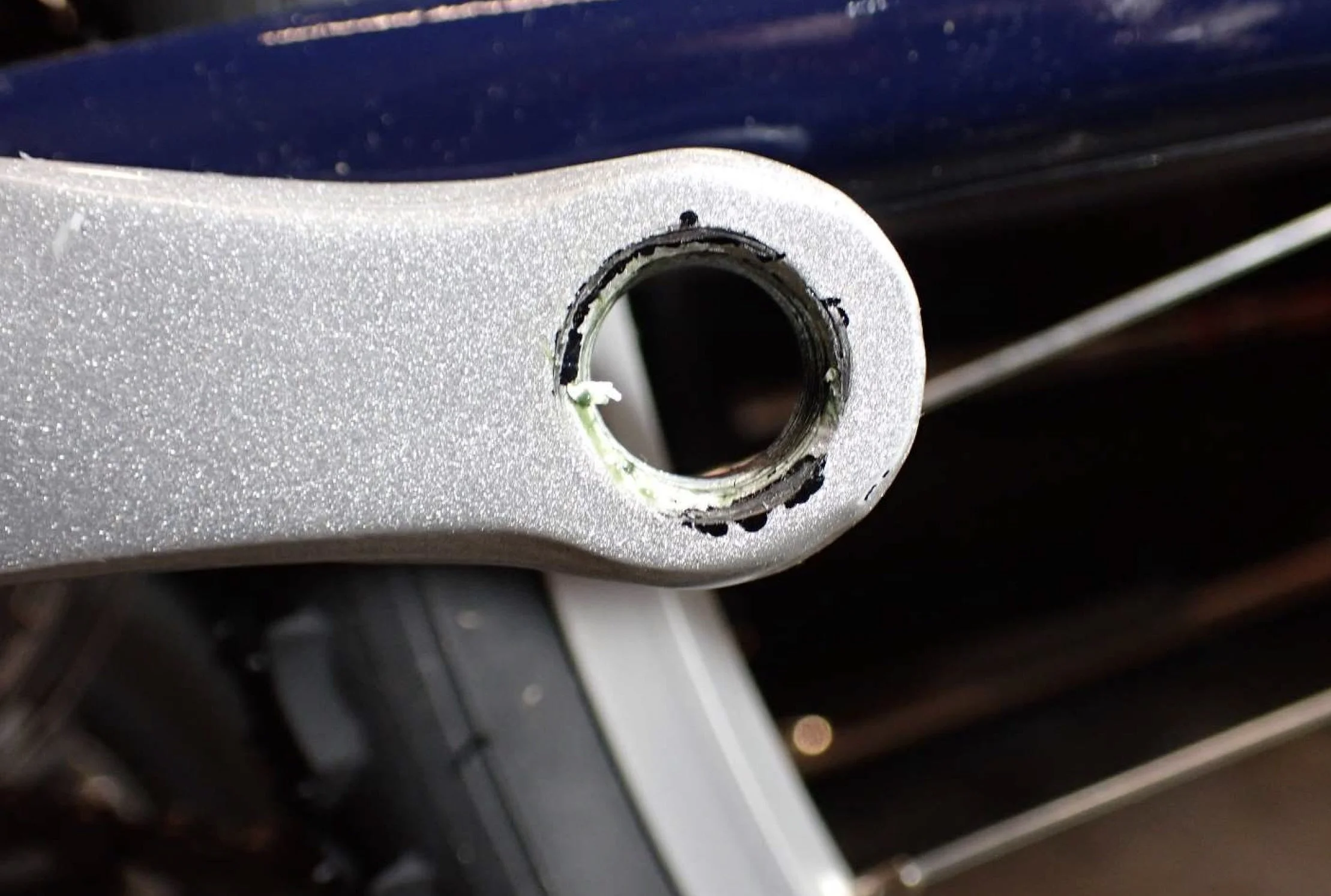
Do not repair or dispose of anything. Your bike, your helmet, your clothing, your lights. Keep them exactly as they were after the crash. A cracked helmet is physical proof of the force your head absorbed. A bent fork proves the angle of impact. If a component failed, the bike itself may be evidence in a product liability claim against the manufacturer.
Pull your ride data. Garmin, Wahoo, Strava, Apple Watch, and phone health apps record your speed, your route, and the exact moment you stopped. That data can prove you were traveling at a lawful speed in a lawful position when you were hit. Export it and do not delete it.
Keep every bill and every missed day. Medical bills, physical therapy, prescriptions, bike replacement estimates, and a log of work you missed. Damages have to be documented, not estimated.
What to do in the first 48 hours in Denver
If you are physically able, call 911 from the scene and stay there. Colorado law requires the driver to stay and report the crash (C.R.S. 42-4-1606), and you want a police record that they did or did not.
If Denver Police does not respond, or the crash happened where no officer came, file your own crash report with the Colorado DMV as soon as possible. The absence of any report is something the insurer will use against you.
Get seen by a doctor that day. Say clearly that you were hit while riding a bike. Describe every symptom, including ones that seem small. Ask specifically about concussion. Emergency rooms miss mild brain injuries more often than people expect.
Do not give a recorded statement to the driver's insurance company. Their adjuster may call within a day, sounding helpful. You are not required to talk to them, and what you say will be used to reduce your claim.
Write down everything you remember while it is fresh. Where you were, which direction you were going, what the driver did, what they said, what the weather and light were like.
Call an attorney. Not because you have decided to sue, but because evidence preservation has a clock on it and an attorney can stop it. For the full scene checklist, see 12 Steps to Take After a Bike Crash to Protect Your Rights.
Why Colorado's comparative negligence rule makes evidence matter more
Colorado uses modified comparative negligence (C.R.S. 13-21-111). If a jury finds you 50 percent or more at fault, you recover nothing. If you are found less than 50 percent at fault, your recovery is reduced by your percentage.
That rule is why insurers work so hard to shift blame onto the cyclist. You were not in the bike lane. You did not have a light. You did not stop. You were not wearing a helmet, which Colorado does not require of adults but which adjusters raise anyway. Every one of those arguments is answered with evidence: your ride data, the scene photos, the witness who saw the driver drift into your lane, the police diagram.
The cyclist who documented everything gets to argue the facts. The cyclist who did not gets to argue against the driver's version.
How long you have to file
For a crash involving a motor vehicle, Colorado gives you three years from the date of the crash to file a lawsuit (C.R.S. 13-80-101(1)(n)). If your claim is against a bike or component manufacturer for a defective product, the deadline is shorter, two years (C.R.S. 13-80-106). Claims against a city or other government entity for a dangerous road condition have a separate notice requirement measured in months, not years.
Three years sounds like a long time. The evidence does not last that long. Camera footage is gone in days. Witnesses move. The vehicle gets repaired. The deadline to file and the deadline to preserve evidence are two different clocks, and the second one is much shorter.
How this plays out at Bike Brain Law
Every case here is handled by one attorney, start to finish. When a new client calls after a crash, the first job is not paperwork. It is preservation: identifying every camera, sending preservation letters to the driver's insurer and to any business with footage, requesting the police report, and making sure the bike and helmet are secured before anyone touches them.
Dan D'Angelo is a trial lawyer and a cyclist who rides Denver's streets. He knows what a three foot pass looks like from the saddle, and he knows how to prove one was not given. If you have questions about whether we can negotiate with the insurer and still take your case to trial, the answer is yes, and it is in writing.
Call 303.831.1116 for a free consultation. No fee unless we win.
Frequently Asked Questions
Have a question about your case?
Attorney Dan D'Angelo offers free consultations for brain injury and cycling accident victims throughout Colorado.
About the Author
Attorney Dan D'Angelo
Trial Lawyer · Brain Injury Advocate · Avid Cyclist
Attorney Dan D'Angelo founded D'Angelo Law Office, P.C. in 2009 and Bike Brain Law to focus exclusively on traumatic brain injury and cycling injury cases in Colorado. An avid cyclist himself, Dan combines deep TBI science knowledge with hands-on cycling experience to build winning cases against insurance companies and corporations that put profits over safety.
- Practicing Colorado personal injury attorney since 2009
- Focused practice in TBI and bicycle injury litigation
- Multi-million dollar settlements and verdicts for injury victims
- Avid road and commuter cyclist