What's a Sharrow?
A sharrow is a painted bicycle-and-chevron marking that tells drivers and cyclists they're sharing the lane and where the cyclist should ride for safety.

By Attorney Dan D'Angelo
Trial Lawyer · Brain Injury Advocate · Avid Cyclist
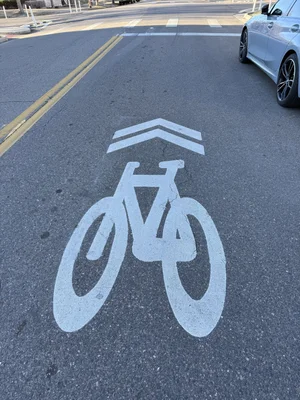
A 'sharrow' is a painted road marking of a bicycle and two chevron arrows, also called a 'shared lane marking.' Sharrows are typically painted on streets with a restricted width and a speed limit of 35 mph or less.
The sharrow symbol reminds all road users that the street must be shared with cyclists and that bicycles may take the entire traffic lane. It also guides the cyclist's lane position. For example, the sharrow may be placed further toward the center of the lane to move cyclists away from parked vehicles, a known hazard from unexpected door openings and cars pulling out, and to discourage motorists from making unsafe passes where there isn't enough room.
The painted sharrow also alerts motorists to expect bicycles. That reminder is particularly helpful at intersections where turning vehicles and cyclists going straight may mix, or where vehicles are merging onto a street.
By indicating the preferred path for cyclists and reminding drivers to look for bike traffic, sharrows help reduce conflicts and improve safety for everyone.
Frequently Asked Questions
What does a sharrow road marking mean?
A sharrow — a painted bicycle with two chevron arrows — is a shared lane marking. It tells everyone on the road that the street is shared with cyclists and that bicycles may use the entire traffic lane.
Where are sharrows usually painted?
On streets with restricted width and speed limits of 35 mph or less — places where a separate bike lane won't fit but cyclists still need a clear, safe lane position.
Do I have to ride directly on the sharrow?
No. It guides your lane position rather than mandating it. Sharrows are often placed toward the center of the lane to keep you clear of parked cars — the door zone — and to discourage unsafe passes where there's no room.
Does a sharrow give me the legal right to take the lane?
The marking itself is a reminder to all users including drivers, pedestrians, and cyclists alike, but your right to the lane comes from Colorado law: when safety requires it — hazards, narrow streets, blocked bike lanes — you may ride in the full lane. The sharrow just makes that expectation visible. The sharrow doesn't give a cyclist absolute right to sit in the lane and block traffic either. A cyclist should still ride to the right and allow traffic to pass if and when it is safe to do so.
What if a driver ignored the sharrow and hit me?
Then the marking helps your case — it shows drivers were warned to expect and respect bicycle traffic. If a driver violated that expectation and hurt you, call me.
Have a question about your case?
Attorney Dan D'Angelo offers free consultations for brain injury and cycling accident victims throughout Colorado.
About the Author
Attorney Dan D'Angelo
Trial Lawyer · Brain Injury Advocate · Avid Cyclist
Attorney Dan D'Angelo founded D'Angelo Law Office, P.C. in 2009 and Bike Brain Law to focus exclusively on traumatic brain injury and cycling injury cases in Colorado. An avid cyclist himself, Dan combines deep TBI science knowledge with hands-on cycling experience to build winning cases against insurance companies and corporations that put profits over safety.
- Practicing Colorado personal injury attorney since 2009
- Focused practice in TBI and bicycle injury litigation
- Multi-million dollar settlements and verdicts for injury victims
- Avid road and commuter cyclist