Where Bicyclists Are Legally Allowed to Ride on Colorado Roadways
Bicycles are 'vehicles' in Colorado and may ride on most roads. Here's where you can ride, when you can take the lane, and the hazards you don't have to ride through.

By Attorney Dan D'Angelo
Trial Lawyer · Brain Injury Advocate · Avid Cyclist
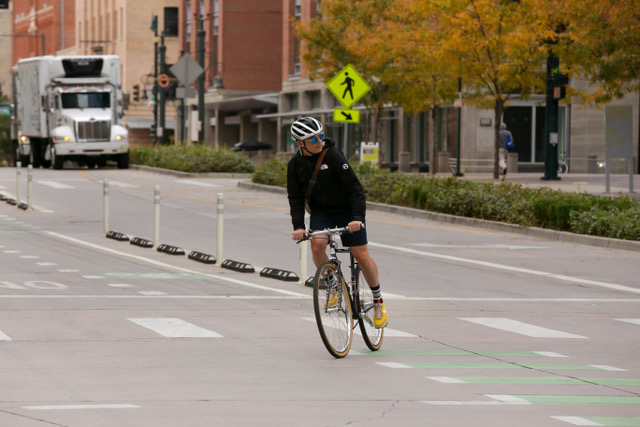
A bicycle is considered a 'vehicle' in Colorado and may ride on most roads unless prohibited. Bicycles are prohibited from certain parts of interstates and highways like the I-70 Eisenhower Tunnel. So where on a roadway can a cyclist legally ride?
Like motor vehicles, bicycles must be driven on the right half of the roadway with some exceptions like passing or avoiding hazards. If riding at the 'normal speed of traffic,' a bicyclist may ride in any lane just like a motor vehicle. A bicyclist can match traffic speed when descending or on slower city streets (Denver's default city limit is 20 mph).
If riding at less than the normal speed of traffic, the bicyclist must ride in the right-hand lane except when:
- Preparing for a left turn at an intersection, private roadway, or driveway
- Overtaking a slower vehicle
- Taking reasonably necessary precautions to avoid hazards or road conditions
- Riding on the left-hand portion of a dedicated right-turn lane even if not turning right
- On a one-way roadway with two or more lanes, riding as near to the left-hand curb as the rider judges safe
A bicyclist is not expected or required to ride over or through hazards at the edge of the roadway, or to ride without a reasonable safety margin on the right or left.
Reasons for a Bicyclist to Move Toward the Center of the Lane
- Increase visibility to vehicles crossing in or in front of you from stop signs, alleys, parking lots, or turning movements
- Prevent an unsafe pass on a narrow street or blind curve
- Avoid car doors opening into the cyclist whether they are in a bike lane or not
- Avoid uncleared winter ice and snow on the road edge or bike lane
- Avoid debris like sand, gravel, broken glass, branches, or garbage cans
- Avoid pot holes, sewer grates, storm drains, or gutters
- Unpaved shoulders or sharp drop-offs
- Bike lane blocked by a parked vehicle or construction sign
- Bike lane ending, forcing a merge into the traffic lane
- Crossing railroad or light rail tracks straight on to avoid catching a tire
- Preventing a 'right hook' turn in front of the cyclist at an intersection
- Approaching a traffic circle or roundabout
Frequently Asked Questions
Are bicycles allowed on all Colorado roads?
Almost. A bicycle is legally a "vehicle" in Colorado and may ride on most roads unless specifically prohibited — like certain interstate stretches, including the I-70 Eisenhower Tunnel.
Do I have to stay in the bike lane?
No. You're never required to ride through hazards at the road's edge, and you don't have to squeeze into an unsafe margin. If the bike lane is blocked, icy, full of debris, or ending, you can move into the traffic lane.
When can a cyclist take the center of the lane?
Whenever safety calls for it. For example, to be visible at intersections and driveways, prevent an unsafe pass on narrow streets, avoid opening car doors, dodge ice, debris, potholes or bad grates, cross rail tracks straight on, avoid a right hook, or when entering a roundabout.
Can I ride in any lane if I'm keeping up with traffic?
Yes. Riding at the "normal speed of traffic" — common when descending or on slower city streets (Denver's default limit is 20 mph) — you may use any lane just like a motor vehicle. The right-lane rule only applies when you're moving slower than traffic, with exceptions for left turns, passing, and hazards.
What if a driver says it was the cyclist's fault and didn't belong on the road?
They're usually wrong — and that misunderstanding causes crashes. If a driver hit you or forced you off the road, call me. Cyclists are vulnerable road users and there are many laws in place in Colorado meant to protect cyclists. I ride all over Colorado. I know what it's like riding with traffic and I know the laws that protect cyclists,.
Have a question about your case?
Attorney Dan D'Angelo offers free consultations for brain injury and cycling accident victims throughout Colorado.
About the Author
Attorney Dan D'Angelo
Trial Lawyer · Brain Injury Advocate · Avid Cyclist
Attorney Dan D'Angelo founded D'Angelo Law Office, P.C. in 2009 and Bike Brain Law to focus exclusively on traumatic brain injury and cycling injury cases in Colorado. An avid cyclist himself, Dan combines deep TBI science knowledge with hands-on cycling experience to build winning cases against insurance companies and corporations that put profits over safety.
- Practicing Colorado personal injury attorney since 2009
- Focused practice in TBI and bicycle injury litigation
- Multi-million dollar settlements and verdicts for injury victims
- Avid road and commuter cyclist